
A Simple Way to Fall Asleep Faster
Do you have trouble falling asleep at night? Do you wake up tired, even after a full night in bed?
Practicing evening meditation can calm your mind, lower stress, and help your body get ready for deep, restful sleep.
These days, insomnia, anxiety, and nighttime overthinking are more common than ever. Instead of relying just on medication, many people are choosing meditation as a safe and natural way to sleep better.
You cannot force sleep, but you can invite it. Meditating before bed helps create the right mindset and relaxes your body for restful sleep.
Why You May Be Struggling to Sleep
Sleep problems often happen when your nervous system is out of balance or your mind is overstimulated.
Common causes include:
- Stress and anxiety
- Racing thoughts at night
- Excessive screen time
- High cortisol levels
- Irregular sleep habits
- Staying in “fight or flight” mode
When your body stays alert, it is hard to fall asleep. Evening meditation helps trigger your body’s natural relaxation response, making it easier to switch into a restful state.
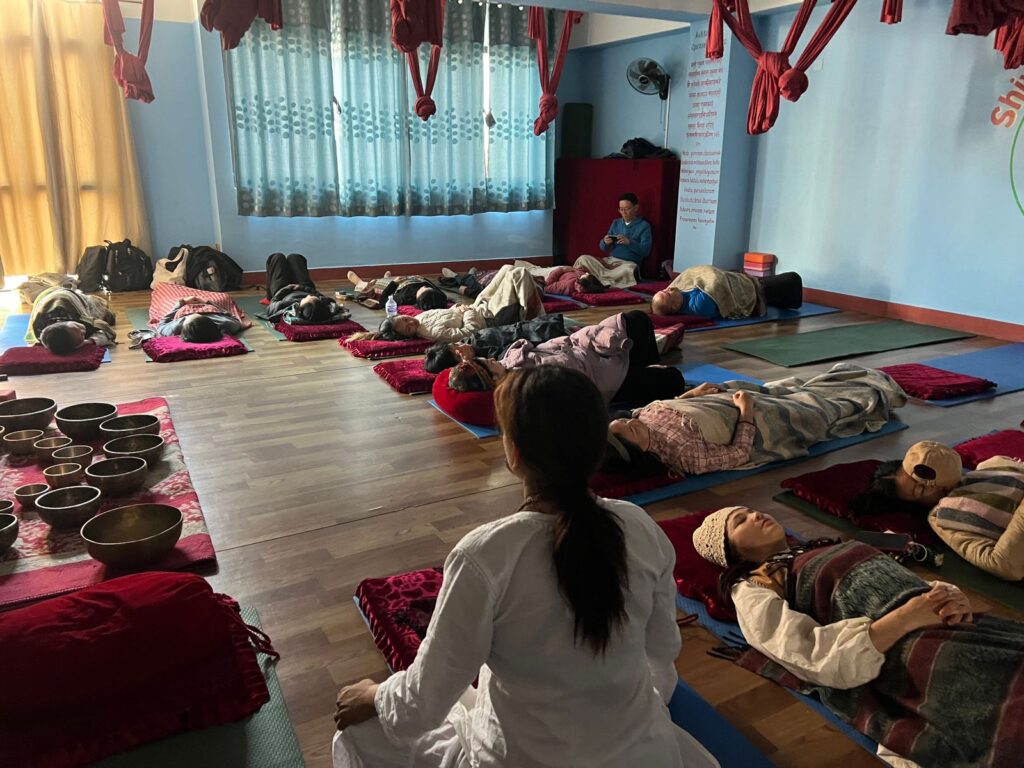
How Evening Meditation Helps You Fall Asleep Faster
Regular mindfulness meditation for sleep can:
- Slow your heart rate
- Reduce stress hormones
- Relax muscle tension
- Quiet mental chatter
- Support natural melatonin production
- Improve overall sleep quality
With consistency, if you practice regularly, meditation helps your nervous system learn to move smoothly into sleep. sleep. The 10-Minute Evening Meditation for Better Sleep
You do not need any complicated techniques. You can use this simple bedtime meditation every night. ment
Dim the lights. Turn off electronic devices. Sit comfortably in a quiet space.
Step 2: Practice Deep Breathing
Close your eyes. Inhale slowly through your nose for four counts.
Exhale gently for six counts.
Continue for several minutes.
Step 3: Relax the Body
Bring awareness to your body. Notice how your body feels. Relax your forehead, jaw, shoulders, arms, chest, and legs. Let any tension slowly fade away. Notice your thoughts without judgment. If your mind wanders, gently bring your attention back to your breath.
After about 10 minutes, lie down and let sleep come naturally.
Evening Meditation for Insomnia
If you have insomnia, meditation can help lower hyperarousal, which is one of the main reasons people have trouble sleeping.
Studies suggest that meditation for insomnia improves sleep continuity and reduces nighttime awakenings by calming the nervous system and lowering cortisol levels.
With time, your body starts to associate meditation with rest, making it easier to fall asleep naturally.
The Science Behind Meditation and Sleep
Research shows that mindfulness meditation:
- Reduces sympathetic nervous system activity
- Enhances parasympathetic activation
- Lowers blood pressure
- Improves emotional regulation
- Supports healthy sleep As your brain waves move from alert beta states to more relaxed alpha and theta states, your body gets ready for deep sleep. That is why evening meditation is seen as one of the best natural ways to solve sleep problems. problems.
Benefits of Practicing Evening Meditation Daily
With consistent practice, you may experience:
- Falling asleep faster
- Deeper and uninterrupted sleep
- Reduced anxiety before bed
- Better mood during the day
- Improved mental clarity
Being consistent matters more than how long you meditate. Even five to ten minutes each night can make a real difference.
Final Thoughts
Better sleep does not come from trying to control it. It comes from letting go.
Evening meditation for better sleep helps you let go of the day, quiet your thoughts, and return to inner calm. When the mind relaxes, sleep follows naturally.
Tonight, spend a few minutes before bed sitting quietly, breathing slowly, and letting go.
Your journey Your path to peaceful, restful sleep starts with awareness. thank